|
|
 |
Richard Causton Interview
Posted on 26 March 2006. © Copyright 2004-2026
Composition:Today
|
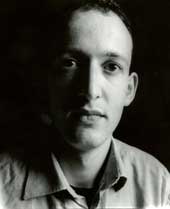
CT talks to British composer Richard Causton, whose recent work, Between Two Waves of the Sea, was premiered by the
CBSO at Symphony Hall, Birmingham.
 |
|
Richard Causton
|
Tell us something about your background.
I grew up in Inner London and went to school there. The state comprehensive
schools I went to weren't as good academically as many fee-paying schools
are, but socially they were a real education. In one school in particular,
50 different languages were spoken by the kids and their backgrounds varied
dramatically - from the children of diplomats and middle-class professionals
to kids from the nearby housing estate and newly-arrived refugees: a real
mix of people. On Saturdays I attended an excellent state-run music school,
where I studied the flute and composition, sang in choirs, etc.
After I left school I studied composition privately with Param Vir, and then
at the University of York with Roger Marsh. I then did a postgraduate at the
Royal College of Music with Jeremy Dale Roberts and spent six months in the
electronic music studios of the Civica Scuola in Milan, where I also had
some lessons with Franco Donatoni.
How did you start composing?
I started composing quite early on - at the age of 8 or 9. I was already
having flute lessons by then and I couldn't get over the fact that having
learnt how to play the notes, you could put them together in any way you
wanted to - not just play tunes written by other people. Quite soon I was
trying to write things for other instruments too so that I could play them
with other members of my family.
Who or what has influenced your style?
Perhaps the biggest influence came while I was at university in York - there
was a wonderful experimental atmosphere there and lots of good performers so
it was the ideal place to try things out. The first course I took there was
on the post-war avant garde, and really discovering that music at the same
time as Javanese gamelan and getting loose in the electronic music studio
was quite mind-blowing at the time. I still think the composers of the post
war period (Berio, Stockhausen, Boulez and Ligeti) are extremely important
and in terms of the strength of their vision, their boldness and
single-mindedness they are a huge inspiration and influence. And going back
further, Messiaen, Carter, Tippett, Stravinsky and Nielsen are all massively
important to me as well.
Where do your ideas come from?
I suppose in one sense they come from whatever I feel I need to do in a
particular piece - currently, for example, I'm really letting my hair down
and doing some things that not long ago I would have considered in bad
taste. Sometimes my music draws on my own experiences - often physical
things such as the feeling of touching down in an aeroplane, or having a
high temperature and being delirious. But it could also be politics, visual
art, poetry, photography or even the weather. Ideally there's a spontaneous
coming together of musical and poetic ideas (and possibly a compositional
technique) so that it's not forced; one thing invites the other.
Do you have particular techniques - ones you come back to again and again? Tell us a bit about them.
There are sometimes specific techinques - such as accelerations/tempo
relationships that I work out mathematically or little pieces using only 6
of the 12 semitones - but they tend to be solutions to localised problems
rather than things I'd use again and again. I certainly have favourite
types of harmony and habits of voice-leading, part-writing and
instrumentation, but that's not really the same thing...it's usually more
intuitive and I work hard trying to 'feel my way' into a piece - and often
towards the end find myself paring material away so that what remains feels
quite tightly-written.
What advice would you give to a young composer just starting out?
Be bold and write the music that you want to write. I think composers at the
start of their careers are sometimes condescended to because other people
involved in the musical process want a quiet life: all new music may seem
uncomfortable/awkward at certain points in the musicmaking process, by
virtue of its newness.
Be self-critical and ask yourself whether what you have written is really
the best realisation of your intentions. If it is, and you're lucky enough
to really believe in the music (and this is something which comes out of
your relationship with your own musical material) then you have a duty to
that music to give it the best possible chance of being heard and enjoyed by
others.
What are you working on at the moment?
A very short concert-opener for string orchestra for this year's Aldeburgh
Festival.
Do you have a routine? A place that's special
I'm terrible with routines! I sometimes read about people who get up at 6am
and work until lunch and then do something else in afternoon, or novelists
who write 800 words every single day, and I wish I could work in that way.
What ususally happens with me is that for ages I can't get started on a
piece (which is a depressing, even painful, situation) and then once I do it
starts to take my life over so that towards the end I can't think about or
do anything else.
But having a (physical) space to work in where I can close the door and not
be disturbed is vital; it's virtually a pre-requisite for the psychological
space in which the piece takes shape.
Your most recent orchestral commision, 'Between Two Waves of the Sea' premiered by CBSO, featured electronics, can you tell us about the sounds you used and how you blended them with the orchestra?
The electronic part of 'Between Two Waves of the Sea' was simply recorded
orchestral music which I composed alongside the live material, and it's
played back untreated (via a sampler) through speakers located behind the
audience. Sometimes it's barely audible, like something half-heard in the
distance which gradually reveals itself; at others it is like a separate
orchestra playing in the next room; and just occasionally it challenges the
live orchestra like its mirror image in passages of conflict. The 'live' and
'recorded' elements are rarely in the same tempo as one another and the
interplay between them represents a sort of dialogue between different kinds
of time, or between life and death. The recorded, or 'virtual' part of the
piece also contains flashbacks and premonitions of things yet to come in the
'live' part, and in the centre of the work it increases the density of
musical time, forcing nearly all of the material of the piece into just a
few seconds.
The spatial aspect of the piece is very important - and for that reason it's
rather difficult to get a proper sense of the piece from listening to a
recording.
What are your views on the current state of composition? Are we living in a healthy artistic environment at present?
I think that notated music is very undervalued right now, for all sorts of
reasons. Take Stravinsky, for example - I'm convinced his achievement at the
start of the twentieth century was every bit as great as Einstein's, Freud's
or Picasso's, and yet the level of general public awareness of his work is
pitiful. And ironically (for a time-based artform) good quality music
reveals its treasures slowly and increasingly people seem to want a quick
return - to be instantly pleased. And this sort of situation doesn't favour
difficulty or multi-dimensionality in any art.
The danger in all this is that composers dilute their vision in an attempt
to cater to the perceived 'market' and end up writing music which is of
little value because it lacks conviction. Right now it's worth remembering
that there have always been times in history when artists have had to swim
against the tide - and things must have seemed very much bleaker for artists
in, for example, the Germany of the 1930s.
What are your plans for the future?
I would very much like to write a piece for theatre - I have never really
collaborated with another artist before and I think that would be very
exciting.
How can people find out more about you?
Probably the easiest way is via my webpage, which contains a biog, lists of
works and recordings, etc. It's at http://www.oup.co.uk/music/repprom/causton/
Interview by Composition:Today © Copyright 2004-2026
 Comments by other Members Comments by other Members
| |
|
|



