|
|
 |
Matthew Schellhorn Interview
Posted on 26 May 2007. © Copyright 2004-2026
Composition:Today
|
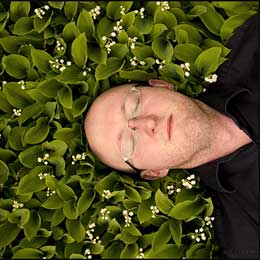
C:T talks to Matthew Schellhorn, one of the rising stars of the new generation of UK pianists
 |
|
Matthew Schellhorn
|
Tell us something about your background.
Originally, I'm from Yorkshire, where I was born in 1977.
At thirteen, I went to study at Chetham's School of Music in Manchester, where I learned with a wonderful piano teacher, David Hartigan; during that time I also took lessons with Ryszard Bakst and Maria Curcio. They were all extremely different teachers, yet the variety of approaches I experienced from a young age was so helpful, and still is. I'd say what my early teachers had in common was a deep respect and love for music, and I could feel that from them. In addition to the insights they shared with me, they also made me realise the need to work hard, and the need to look with fresh eyes at music no matter how familiar it is.
After school I went to study music at Cambridge, and while there I began to study with Peter Hill, whose recordings I had got to know at school. I had started to play Messiaen's music when he died (in 1992), and as I played more and more Messiaen it seemed natural and only right that I should ask for Peter's advice on my playing. I was also looking for a teacher that could respect the fact that I was by now an adult! What developed took me completely by surprise: we got on so well that we became good friends, which created an ideal environment for learning. I couldn't but respect the beauty of Peter's music making, not to mention the experience he brought to lessons having studied with Messiaen himself; but we also studied so much more - lots of Chopin, Bach, Mozart, Berg - and we talked a lot about music.
Later on, more recently, I went to study in Paris with Messiaen's wife, Yvonne Loriod (whom I had first met when I was seventeen). These lessons were extremely moving experiences, where we would play for long periods, chat about Messiaen's life, and also about life in general. Madame Loriod's sheer humanity and kindness remains a huge inspiration to me.
How did you become interested in Contemporary Music?
I have always been interested in contemporary music; I don't think I can remember why or how it happened. I think I have always been open to playing any music.
When I play an 'established' piece I try to approach it as if it had just been written, so that I can try to experience how fresh it must have sounded when it was itself new.
You have a special relationship with Messiaen's music. What is it that attracts you about his music?
Messiaen's music has a bit of everything that great music has! Rhythmic vitality; harmonic colour; subtlety and suppleness of expression. The Catholic spirituality in Messiaen interests me greatly, as does his fascination with the natural world. There is also great virtuosity, which of course I enjoy! The first piece of Messiaen I played was, I think, Île de feu No. 1 from the Quatre études de rythme.
What excites you about a piece of music - what keeps you interested?
I like music that seems uncontrived. And it needs to be emotionally direct. I also like a piece to have a strong formal sense, which is not to say that it needs to be structured in an obvious way. One of my favourite pieces of new music is Ian Wilson's Lim, the form of which is discernible almost only when viewed, as it were, from a distance: it proceeds like a stream of consciousness when you're playing or listening to it, though. I'm also very fond of James MacMillan's piano miniatures: everything that is on the page is 'necessary'. Speaking technically, I like a certain amount of lyricism and rhythmic dynamism. I think you can 'feel' when a piece is written well: it validates itself.
And what turns you off ?
Complexity that seems to be for its own sake.
What do you see as the role (intended and actual) of new music in the modern world?
Yes, I guess there is indeed a difference between 'intended' and 'actual' insofar as new music is concerned in the modern world. But maybe it's as simple as this: new music is like old music, and its role is as an expression of the human condition.
How do you go about programming your concerts?
Well, I play pieces that I like! I always think about how a programme will 'feel' to an audience overall. When I programme new music, I do like to give it a context. I experiment often, but never on a complete whim: I weigh it up. I did a recital recently in Cambridge where I decided to make the first half all new music, and then the second half was Schumann Carnaval; I said to the audience how I though that the Schumann is in itself like a collection of separate, quite avant garde pieces, so it suited.
How do you respond to unsolicited work- do you give feedback? Do you ever commission new work yourself?
Well, unsolicited work I always look at and consider playing. I wouldn't really give feedback about a piece except from the point of view of the practicalities of playing it.
I have commissioned music, including pieces by Jeremy Thurlow and Tim Watts. Ian Wilson is now writing a wonderful piece called Stations for me, which is in fourteen movements divided into four 'Books'; I gave the world premiere of the first two Books at this year's London Festival of Contemporary Church Music, and I hope to 'complete' the cycle at the Wigmore Hall next year.
What are you working on at the moment
At the moment I'm preparing to record Ian Wilson's Limena with the Belgrade Strings. I'm thinking about how to structure my repertoire around concerts in the next couple of seasons. And preparing for the Messiaen centenary in 2008 - a big year!
What are your plans for the future?
Lots of things! I want to record more, including the music that has been written for me and also the Messiaen piano works. I'd also love to commission a piano concerto.
How can people find out more about you?
I have a website, http://www.matthewschellhorn.com, where there is a schedule of my concerts and items of news; you can also join my newsletter list there. The best way to find out more is to come and hear me play!
Interview by Composition:Today © Copyright 2004-2026
 Comments by other Members Comments by other Members
| |
|
|



