|
|
 |
Ian Wilson Interview
Posted on 02 February 2006. © Copyright 2004-2026
Composition:Today
|
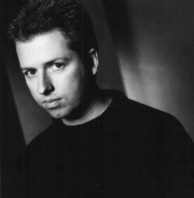
C:T talks to Ian Wilson, one of the rising stars of Irish contemporary music. Ian has just signed a new publishing deal with Ricordi.
 |
|
Ian Wilson
|
Tell us something about your background.
I grew up just north of Belfast, in Carrickfergus, started studying violin
aged 8 and then piano from 13. I studied music at the University of Ulster and started composing then, although I was also involved with a band I played in and wrote songs for at that time. The band fell by the wayside when I got more and more into composing. After my BA I stayed on to do a PhD, which was a useful experience both in terms of being able to really spend time writing and
investigating what I was doing and where I was going, and also in that it gave me a taste for 'full-time' composing which afterwards was something I always aspired to.
How did you start composing?
I had wanted just to write something for a while and ended up setting a poem by a minor Irish poet for soprano and piano. Ugh! After that effort I used a pared-down serial technique for a year or two before I felt confident enough in my own ear to abandon that and rely more on my harmonic intuition. My first quartet, 'Winter's edge' (1992) is the piece I consider my first 'complete' work, not because it's flawless (far from it) but rather because it married technique with purpose, something which I felt my music had been lacking up to that point (with one or two exceptions). I feel I was both a late and a slow starter compositionally, but things moved on gradually during and after my PhD studies, and I began picking up commissions (from 1990 on). For 8 years I was an instrumental teacher (piano, stringed instruments) and occasional lecturer at various places, but gave everything up to concentrate on composing in 1998, since at that point I was doing mostly that anyway.
Who or what has influenced your style?
The two composers I normally mention in relation to this are Feldman and Shostakovich - the former for his wonderful ear for colour, and sense of balance for sonorities and the unfolding of events; the latter for his ability to communicate on an affective level with his listener. These are two qualities I aspire to in my own music. Having said that, I also remember specific occasions when I have heard a composer's work for the first time and been really transformed by it, from composers such as Reich and Tavener to Lachenmann and Ruzicka.
Where do your ideas come from?
Everything from geographical landscapes to the Bible, but above all, visual art from the last century - works by Klee, Miro, Newman, Arp, Munch, Rothko, Pollock, Twombly and Giacometti have all been inspirations for me. Life, too, is an inspiration - our common existence, rather than something particularly biographical (although I've mined that seam now and then, too). In the last few years I have returned to the notion of abstraction as an inspiration in itself, letting a particular instrumentation or musical gesture generate a whole piece.
Do you have particular techniques - ones you come back to again and again? Tell us a bit about them.
Not really - I try and come to the manuscript 'new' every time and hate the notion of 'style' as a required compositional personality trait. Having said that, I have been writing a linked series of works recently which share the same format and some aural characteristics, but that's an unavoidable short-term consequence of this particular project.
What advice would you give to a young composer just starting out?
Experiment a lot but ultimately try and write the kind of music you want to
listen to.
What are you working on at the moment
I'm in the middle of my 2nd chamber opera, 'Minsk', to a libretto by the English poet and novelist, and my long-time collaborator, Lavinia Greenlaw. It's for the Feldkirch Festival in Austria for premiere in may 2007. I'm also working on a piece for the National Chamber Choir of Ireland and the Rascher Saxophone Quartet 'in between scenes'.
Do you have a routine? A place that's special
I try and write every day between 10am and 2.30 or 3pm. The rest of the day I spend on admin or taking care of other things like the Sligo New Music Festival (of which I'm the director). I write in my study, at the piano, which is ideal compared to some of the places in which I have had to write in the
past (school assembly halls, arts centres). I also try and do my domestic share - helping with the homework, bedtime stories, that kind of thing (and dishes! I actually enjoy washing up because it's really the only time I get to
listen to music, everything from jazz to indie rock and classical).
Do you do other work as well as composing?
Not really - I'm involved in concert promotion in Sligo on the west coast of Ireland where I live, but that's out of interest more than anything else.
What are your plans for the future?
There is a series of works I'd like to write, including a clarinet concerto for Carol McGonnell in New York and an 80-minute piano work for British pianist Matthew Schellhorn.
You recently moved to Ricordi from Universal Edition. Could you tell us something about the reasons behind the move and what you hope to gain out of your relationship with Ricordi.
Well, without wanting to go into details, lets just say that it was time to move on, and Ricordi London were enthusiastic about me joining them. I'm pleased to be with a company which has been growing in a good way over the last 5 years and am hopeful that my work will find an appreciative home.
How can people find out more about you?
http://www.ianwilson.org.uk
http://www.ricordi.co.uk
http://www.universaledition.com
http://www.cmc.ie
Interview by Composition:Today © Copyright 2004-2026
 Comments by other Members Comments by other Members
| |
|
|



